Cash-Based Performance Services
Specialized Services
The services most clinics do not offer: focal shockwave therapy, golf performance training, professional bike fitting and running biomechanical analysis. Each one exists because the usual answer of rest and stretch was not solving the problem.
All specialized services are self-pay. Call or text (734) 658-2091 for pricing.

01 · Now in Metro Detroit
Shockwave Therapy
Focal shockwave is a non-invasive, drug-free treatment for stubborn tendon and soft-tissue pain, including plantar fasciitis, Achilles tendonitis, tennis elbow and shin splints. Our Elvation PiezoWave 2 targets deep tissue with pinpoint accuracy to restart healing at the source.
84%
Good results
72.1%
Less pain
85%
Faster return to sport
02 · TPI Certified
Golf Performance Training
Your swing is limited by how your body moves, not how hard you try. We screen how you move before anyone touches your swing, then build the mobility and power to repeat it on 18.
01
A movement screen, not a lesson
Before we talk about your swing, we find out what your body can and cannot do. Hip rotation, thoracic mobility, shoulder range and single-leg stability are the physical limits behind the compensations your coach is trying to fix.
02
Power you can repeat
Distance comes from the ground up. We train the sequence of ground force, hip and torso separation and the deceleration that protects your back, plus the endurance to keep it on the back nine.
03
Trained by a physical therapist
Low backs, lead hips, elbows and shoulders are the usual problems. Because we are physical therapists first, we can treat it and train around it in the same session.
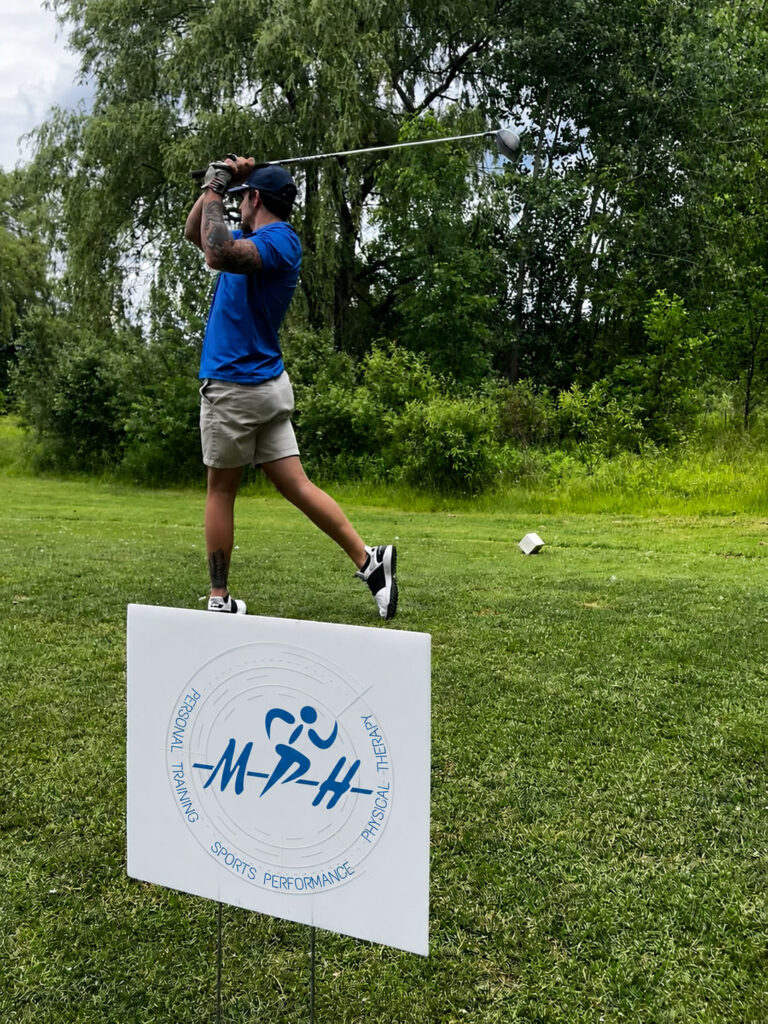

Trevor Elliott, DPT, CSCS
Golf Performance and Longevity · TPI Certified
Trevor leads our golf performance work, helping golfers improve mobility, strength and body mechanics to swing with more power and control. He brings nearly a decade of personal training experience alongside his clinical background.
Recovering from an injury or surgery? Golf-focused physical therapy is part of our PT program. See Golf Physical Therapy →
03 · For Cyclists and Triathletes
Professional Bike Fitting
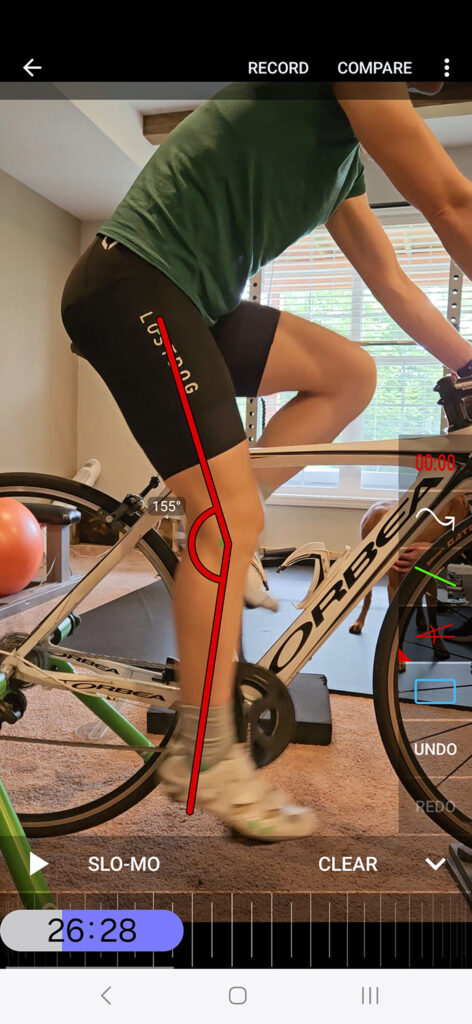
Professional bike fitting is essential for anyone who spends time on their bike and experiences pain or discomfort. We use the latest scientific knowledge to enhance comfort at contact points, reduce overuse injuries and improve overall performance.
Physical assessment
- Selective Functional Movement Assessment (SFMA)
- Ankle and foot biomechanical assessment
Bike assessment
- Cleat fore/aft and rotational adjustment
- Seat height, tilt and fore/aft adjustment
- Handlebar and stem fit, with equipment recommendations
- Cockpit adjustment
All parts are torqued to spec during the bike fitting.
Top 5 benefits of a fresh bike fit
01
Improved comfort
A properly fitted bike reduces discomfort and pain, so you can enjoy longer rides without numbness or soreness.
02
Enhanced performance
A good fit optimizes your power output and efficiency, helping you ride faster and more effectively.
03
Injury prevention
Correct adjustments minimize the risk of injuries caused by improper posture and repetitive strain.
04
Better handling
A well-fitted bike improves control and stability, making your rides safer and more enjoyable.
05
Adapts as you change
As your fitness, flexibility or goals change, a fresh fit keeps your setup right for where you are now.
04 · 70% of Runners Are Injured Each Year
Running Biomechanical Analysis
Seventy percent of runners report a running injury in any given year. If you are trying to find a solution, there are numerous running models, seemingly contradictory footwear recommendations and opinion articles to sift through. Let us help you find a straightforward solution that fits your running style and goals.
For the price of a pair of shoes
you can identify and begin to correct your running errors. Changing biomechanics is hard, so a typical recommendation is one session every two weeks for 2 to 3 months. Personal coaching is paramount to create lasting movement changes.
What we assess
01
Treadmill assessment
Runners are assessed on a treadmill at personalized running speeds from both the side and posterior view. In some cases other assessments are needed, but the treadmill allows for consistency between sessions and more accurate angles, even for runners who do not normally use a treadmill. It provides valuable information either way.
02
Video analysis
We put the video into slow motion and analyze specific moments in the gait cycle, looking for issues such as foot contact, overstriding and crossover gait. We use these findings to identify specific coaching opportunities, then work to improve your mechanics through targeted cues, demonstrations, and repeated practice to help those changes become natural and lasting.
03
Cadence assessment
Sometimes a small change in your running rhythm can make a big difference in how you move. We assess your step frequency to see whether adjusting your cadence could improve efficiency, reduce unnecessary stress on your body, and help you run more comfortably. When a change makes sense, we'll develop a personalized metronome-guided practice plan to help you build a smoother, more sustainable stride that becomes second nature.
Our Running Biomechanical Analysis is tailored to two primary groups of runners: those who are injured or in pain, and those seeking performance enhancement.
1
Runners who are injured or in pain
This group, over 70% of runners, benefits from our focus on improving capacity and reducing mechanical load. We address key issues such as overstriding, increased compliance, lack of compliance (especially post-ACL) and crossover gait to prevent injury and promote recovery.
2
Runners looking to enhance performance
Typically more experienced and committed, these runners benefit from analysis aimed at improving efficiency and reducing energy leaks. We focus on increasing stride length, improving backside mechanics and optimizing cadence, which is influenced by height and speed. Arm movement sets the cadence, while forward body lean acts as the “gas pedal” for speed.
Key concepts
Key concepts include the multi-planar nature of running, the importance of plyometrics, and addressing individual deficits through targeted cross-training. We also emphasize stiffness for core stability, targeting the hip external rotators, high glutes and lateral stiffness, with the “Quadzilla” muscles acting as knee shock absorbers.
Our approach emphasizes adjusting cadence to reduce excessive braking when the foot hits the ground, coaching proper backside mechanics to improve running efficiency and propulsion, and addressing postural alignment to optimize movement patterns. These individualized corrections reduce impact spikes, distribute forces more effectively and reduce injury risk, while also enhancing overall running performance.
Real Results
Gait corrections after two sessions
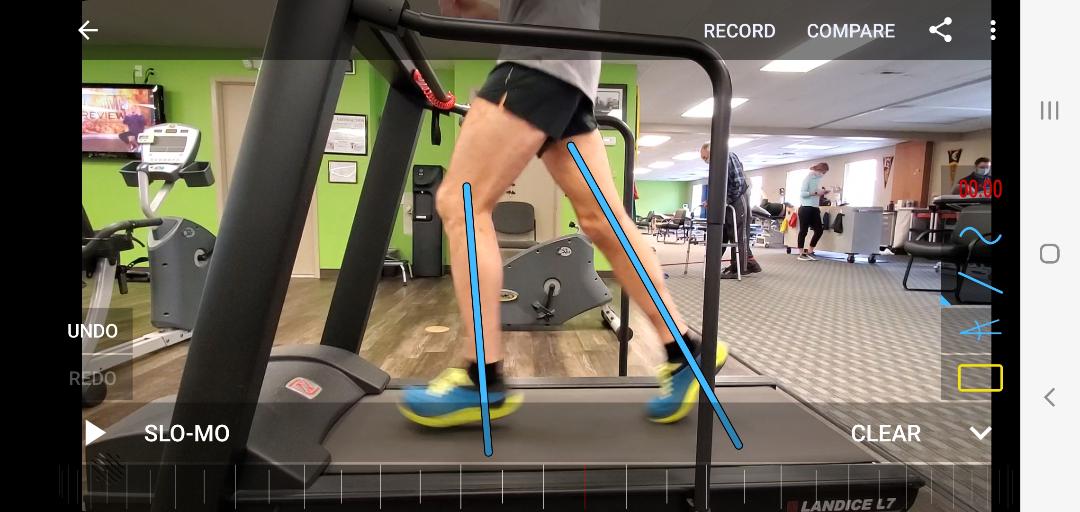
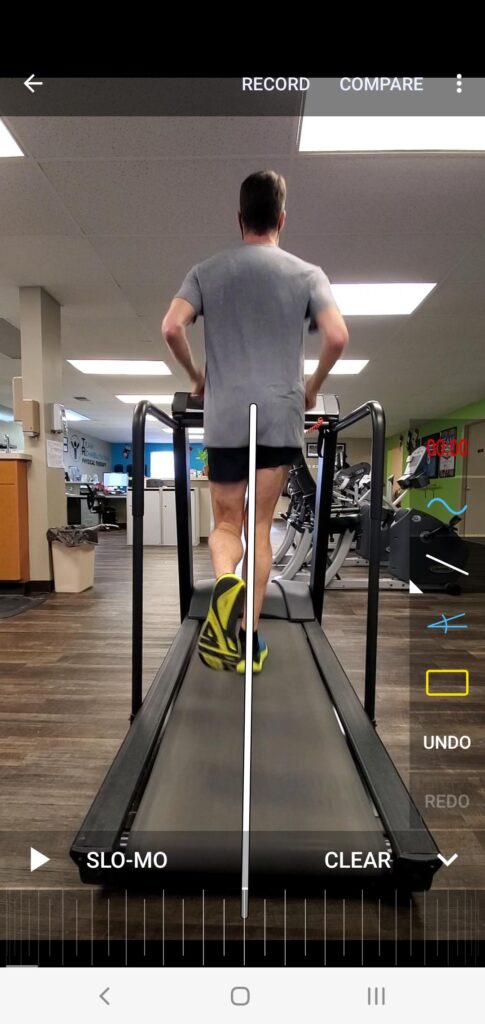
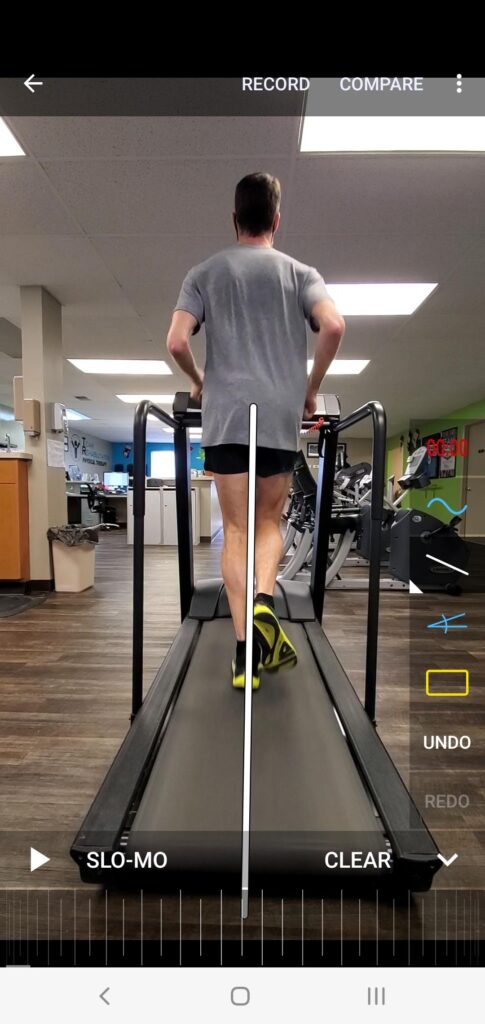
The same runner, filmed before and after two sessions. Each column shows the same view and the same moment in the stride, so you can compare them directly.
Side view
Back view · left foot lands
Back view · right foot lands
Before
After
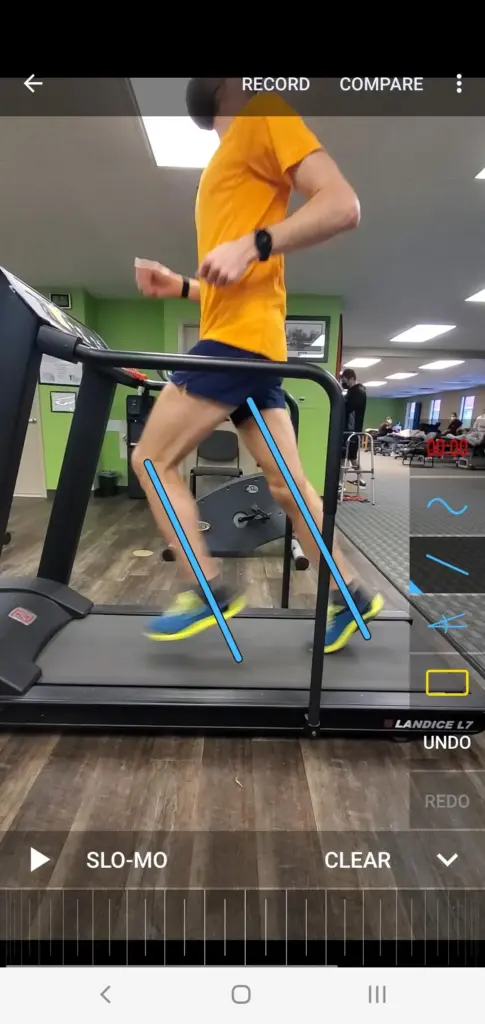
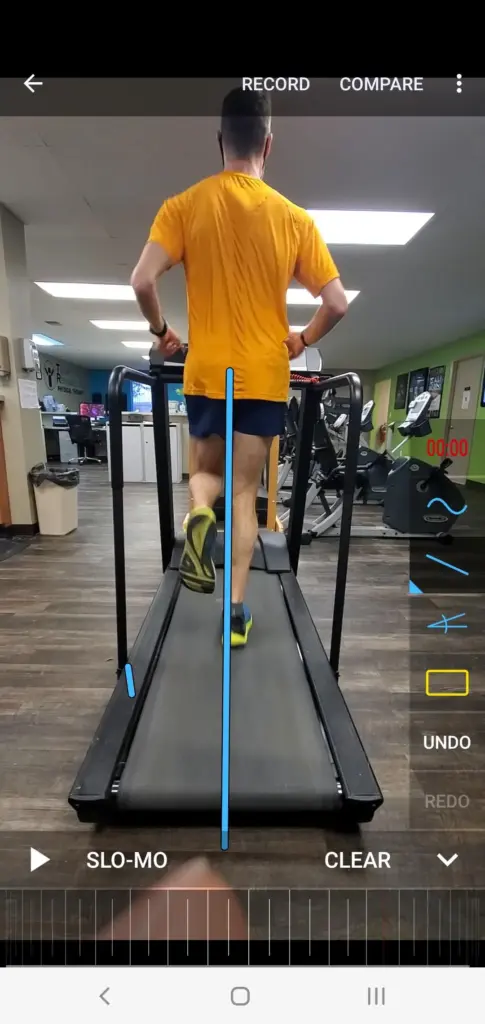
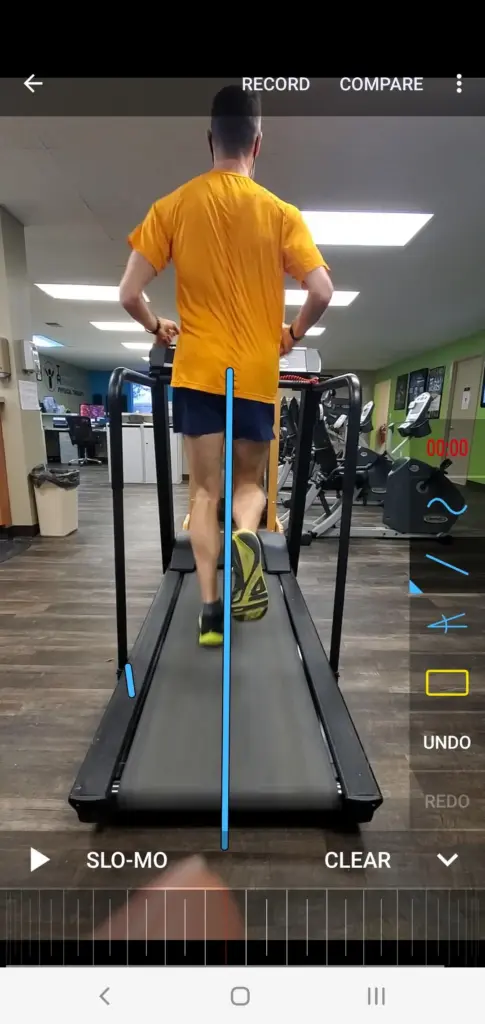
Side view: ground clearance and hip flexors
What to look for: the blue lines along each leg. Compare their angles and how high the trailing foot clears the belt, before and after.
Before: issues with ground clearance and hip flexor activation, affecting efficiency and stride length.
After: improved ground clearance and hip flexor activation increase time in the air between strides, resulting in higher efficiency and longer strides. In some cases this also decreases overstriding.
Back view: crossover gait
What to look for: the vertical line down the center of the treadmill. Compare where each foot lands relative to it, before and after, on both the left and right side.
Before: crossover gait, with each foot landing toward or across the center line.
After: a decrease in crossover gait. Correcting crossover gait can decrease pronation velocity, reduce load on the IT bands and improve efficiency. With continued “homework,” improvement should be even more profound.
★★★★★
Greg has been a great help for me with running form and a couple different running injuries. He tailors his approach to his individual patients and does not rest until he finds a way to help, which in my experience has been much faster than your average PT.
Janie D.
Get Started
Ready to fix what rest and stretching have not?
Tell us which service you are after and what has not worked so far. A team member will reach out within 24 hours.